
Two cities, two ways to quiet the streetBarcelona and Madrid
Road-traffic noise in Barcelona and Madrid: who is exposed, what the sensors heard, and what Barcelona’s green axes and Madrid’s low-emission zone changed.
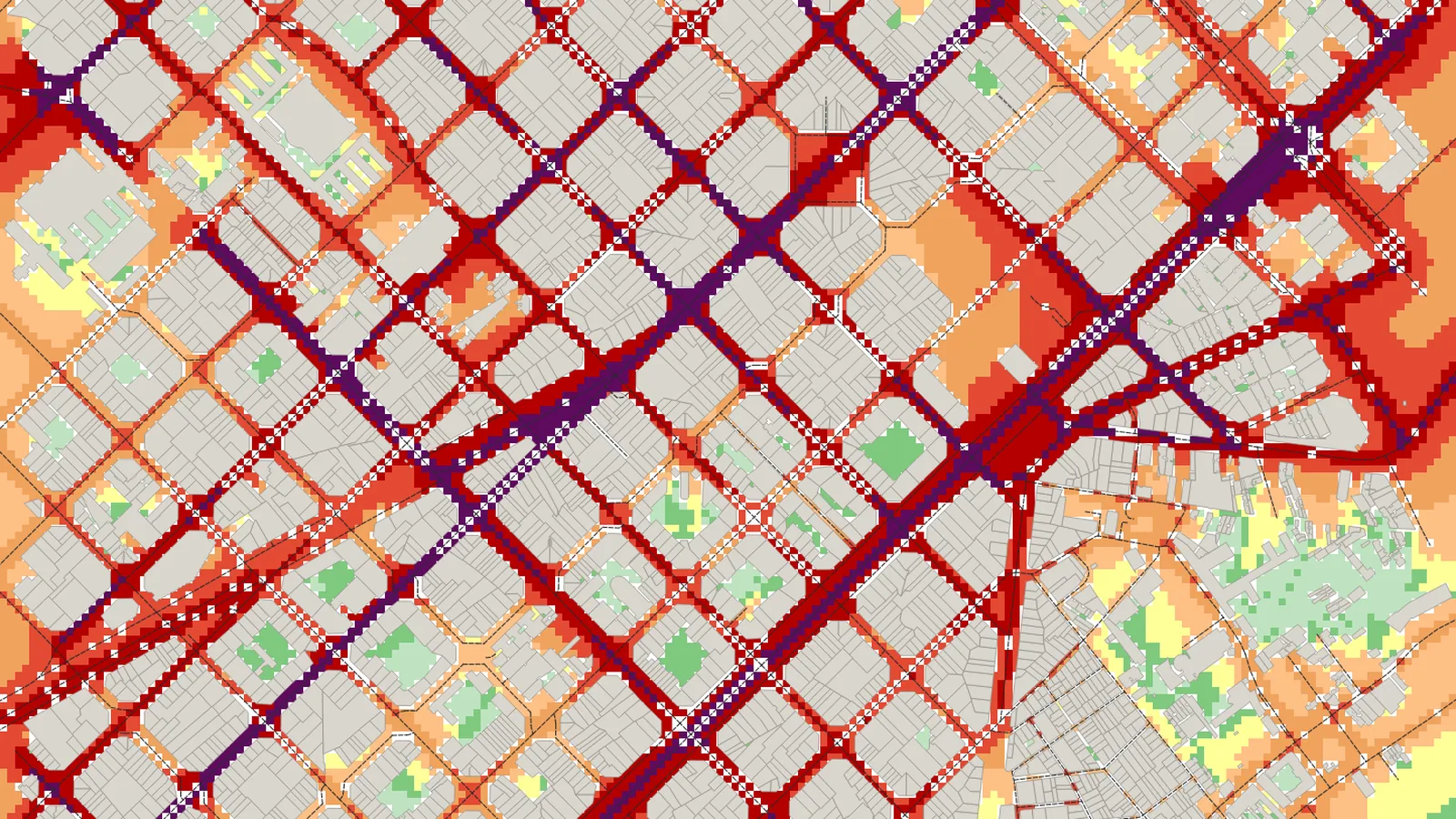
The question
What did redesigning streets, and regulating vehicles, do to noise at people’s windows?
This study as a Tessera mosaic
- EnvironmentLead
- DataLead
- ArchitectureSupport
- VerificationSupport
At a glance
Key numbers
All values are Tessera calculations from open data, or official figures quoted as published.
Findings
What the evidence says
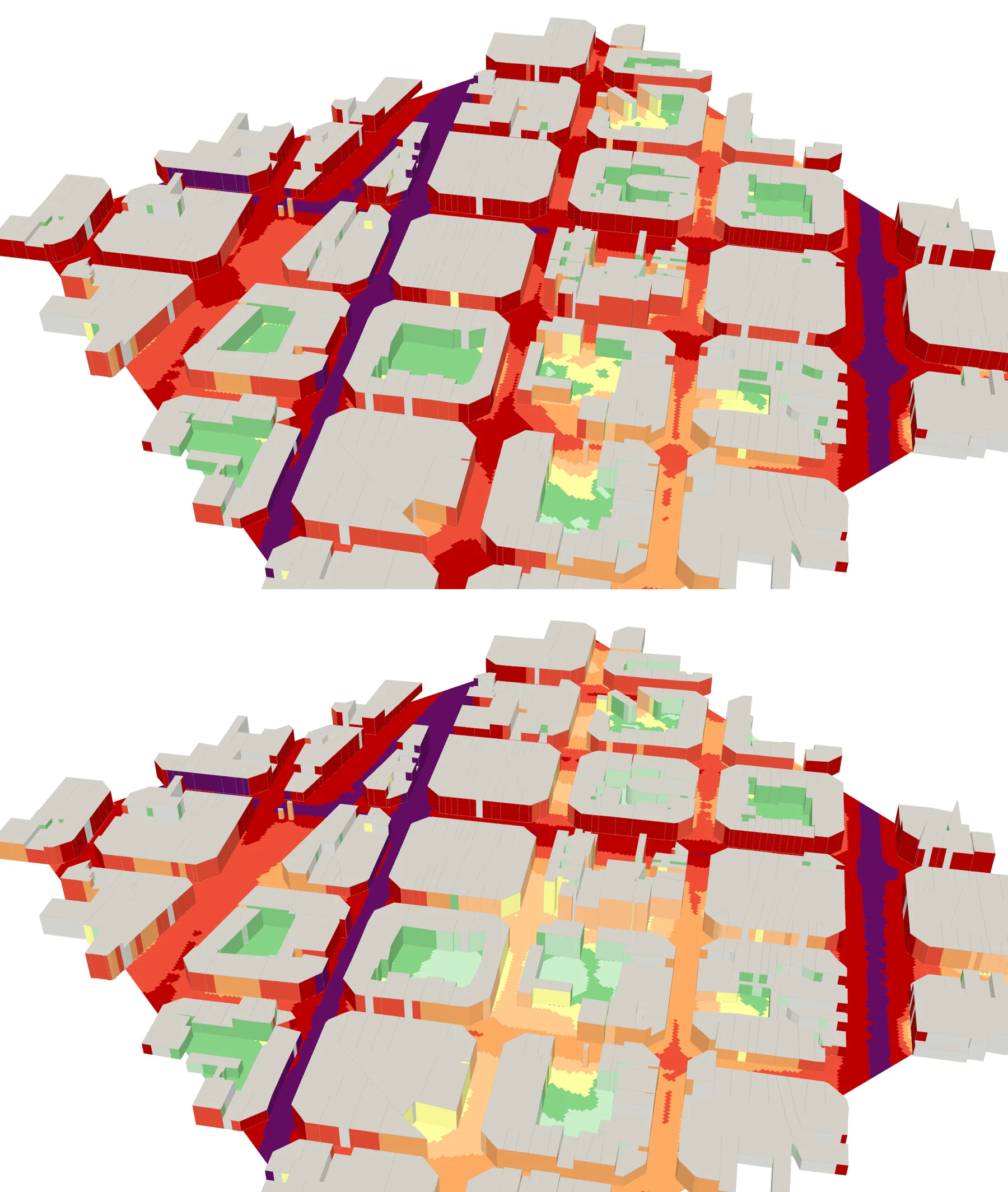
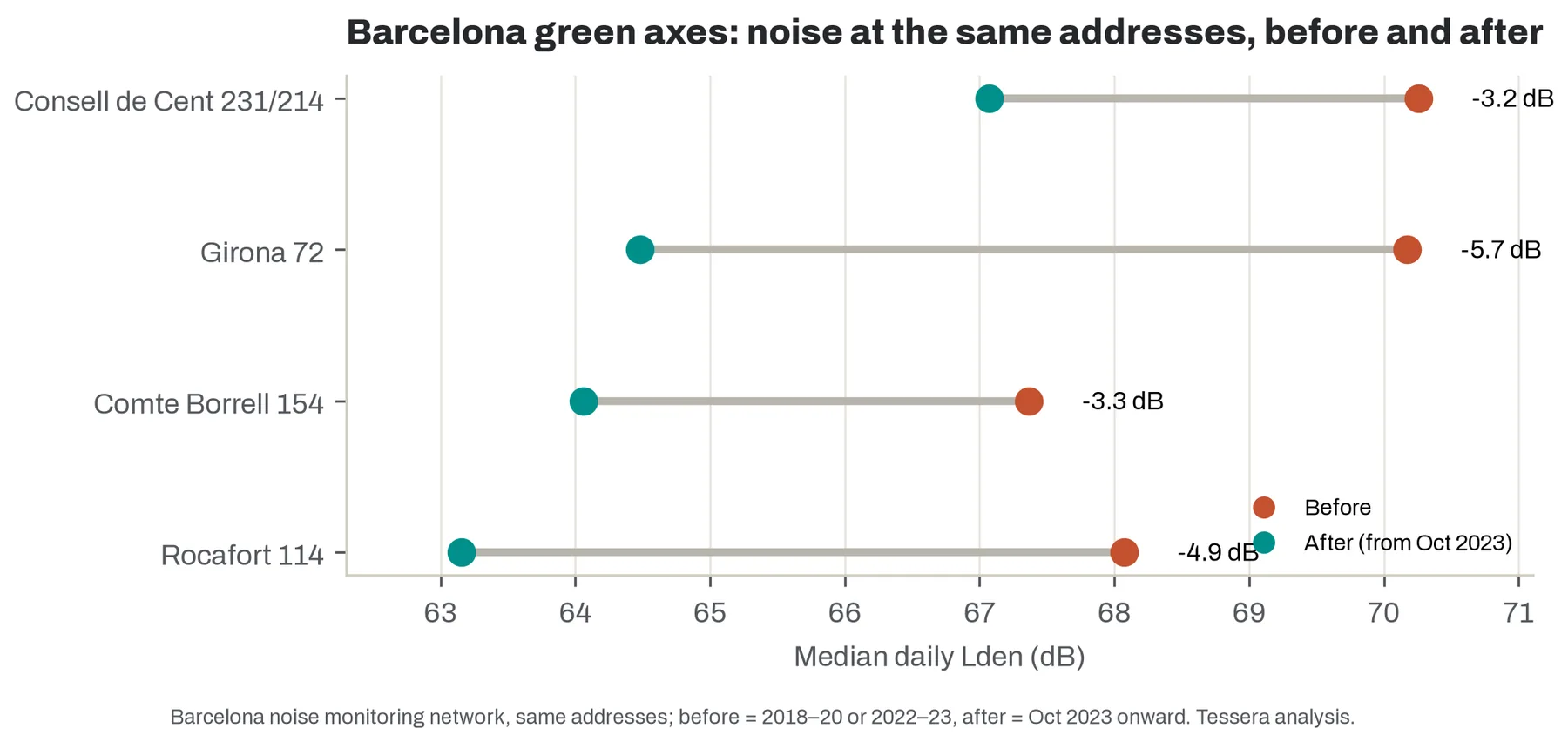
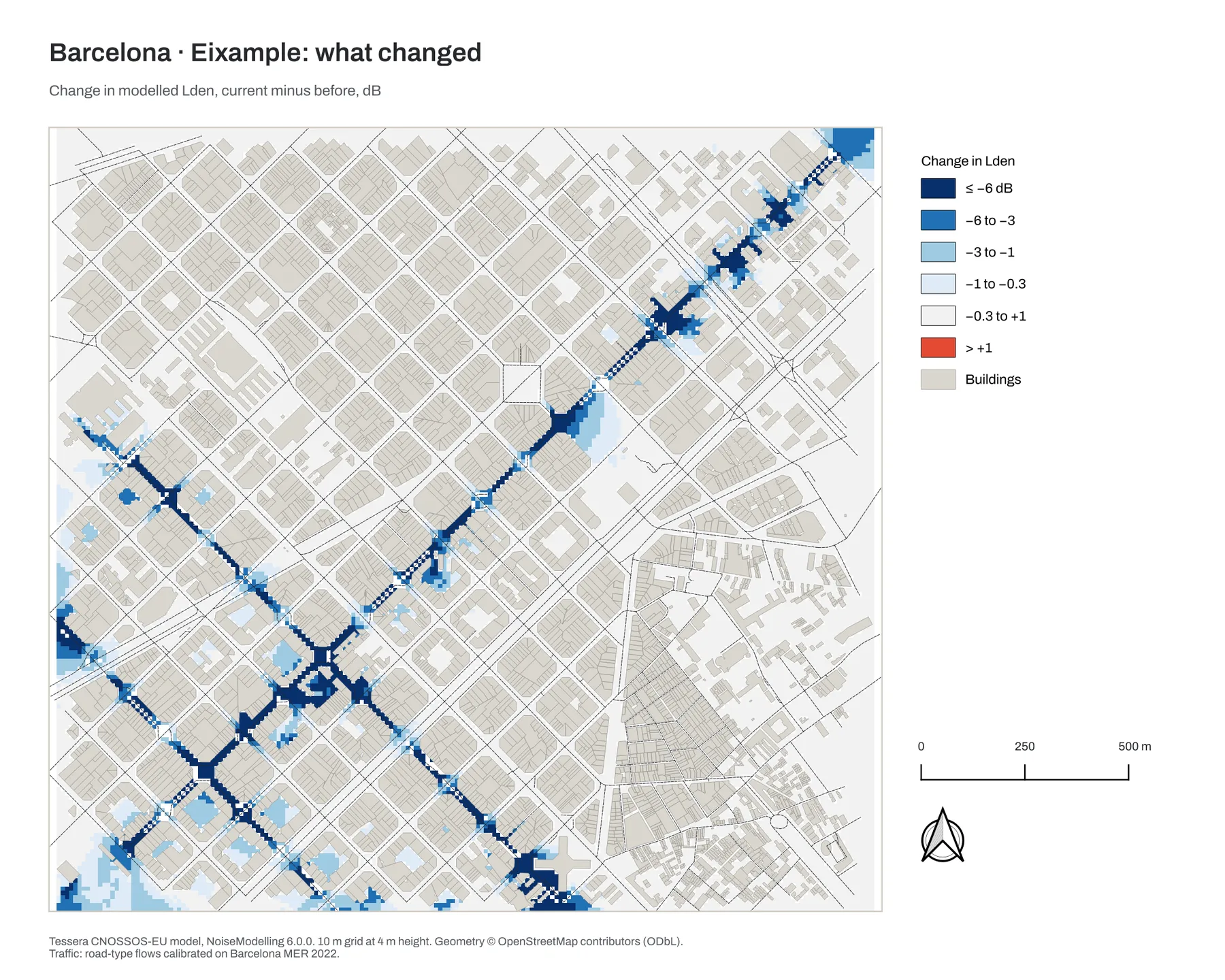
Redesigned streets went quiet
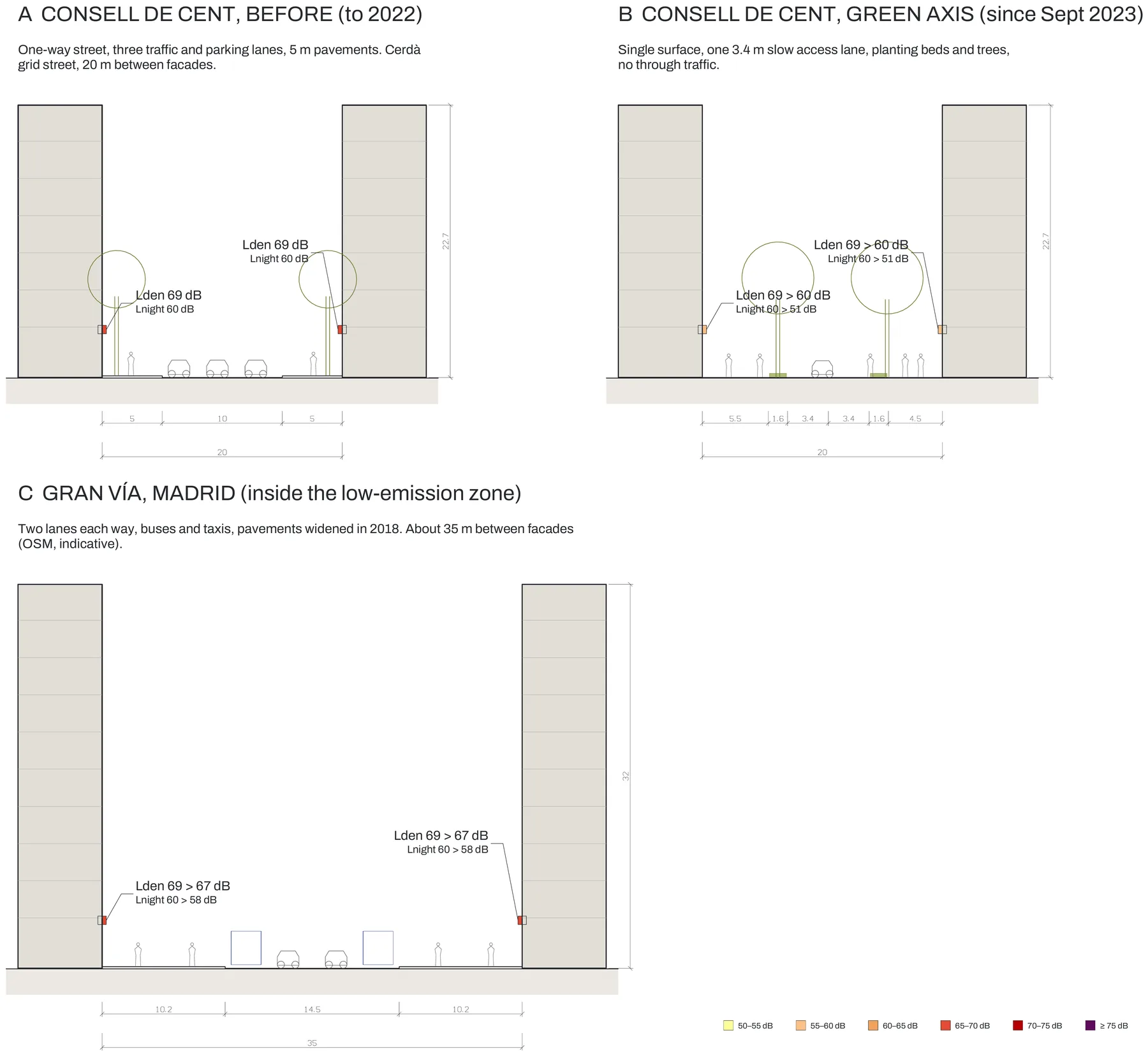
On Barcelona’s green axes the sensors recorded drops of 3 to 6 dB, against a city-wide median of −1.6 dB over the same periods.
Regulated zones cut traffic, not much noise
Madrid Central cut traffic by 14% inside the zone, but the modelled zone-wide effect on noise was −0.7 dB.
The street is the unit that matters
The largest gains came where through traffic disappeared entirely, which is a design decision more than a vehicle rule.
From the report
Maps, models and drawings
A selection from the 73-page report. Every chart names its source.
Open data used
- Mapa Estratègic de Soroll 2022
- Barcelona and Madrid sensor networks
- Madrid traffic counters
- OpenStreetMap
- NoiseModelling 6.0.0, CNOSSOS-EU
Limits
A self-initiated study. The noise model is a study model built from open data and calibrated on one city’s official map; it does not replace the cities’ strategic noise maps.
Start a project
Have a place that needs reading?
Tell us about the site, the programme or the decision ahead. A few sentences are enough to start.
Describe your project